
BIO
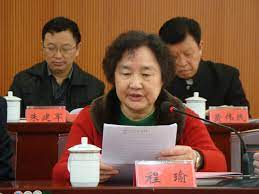
Yu Cheng (or Cheng Yu in order of Chinese name; 程瑜) was born in Chongqing in 1944, a year before the end of the Second Sino-Japanese War. She is one of the younger daughters of Cheng Qian (程潛, 1882 - 1968), an accomplished politician, army officer, poet, that were part of both the Communist Party and the Kuomintang (“KMT”) Party in his life. Ms. Cheng’s mother was his fourth wife, and married him at 20 years old when he was 57, yet they were very much in love. Cheng Qian was one of the earliest supporters of Sun Yat-sen and served under Chiang Kai-shek in the KMT, as Chief of Staff in the Military Affairs Commission in his highest rank. In 1948, he attempted election as Vice President of the Republic of China but failed. In 1949, as Governor of Hunan, he joined forces with Mao Zedong in the Communist Party— namely the “Hunan Qiyi,” which has been appraised by the Chinese government to this day for a peaceful transition of power to Mao without the cost of any lives. Cheng Qian is one of the officials included in the Founding Ceremony of China standing behind Mao in 1949. During the Cultural Revolution that started in 1966, the Cheng family was protected by Zhou Enlai under an order from Mao; however, Yu and her family still underwent a number of shaming and punishment, including the induced suicide of her sister, which was a traumatic experience for her. Yu’s father died in 1968, two years after the start of the Cultural Revolution, yet his coffin was ruined by the Red Guards. Passed on in her intellectual gene, Yu has always been driven to learn and explore the outside world. After the Cultural Revolution, she met an architect couple who sponsored her immigration to the US. Yu settled in Mississippi in January 1980, and brought her daughter and husband a year later. The family came without any money and struggled financially in the beginning and through resilience and hardwork, they have made a comfortable living. The couple and their daughter live in Houston, TX in Chinatown. Ms. Cheng dedicated most of her retired life in documenting and writing about her father’s legendary life. In recent years, she has been working with the Chinese government to build memorial museums dedicated to her father, including Museum of General Cheng (“程公館”), and donation of memorabilia in Museum of Changsha for Cheng Qian’s archive. She has also dedicated a tremendous effort to have her parents buried together.